
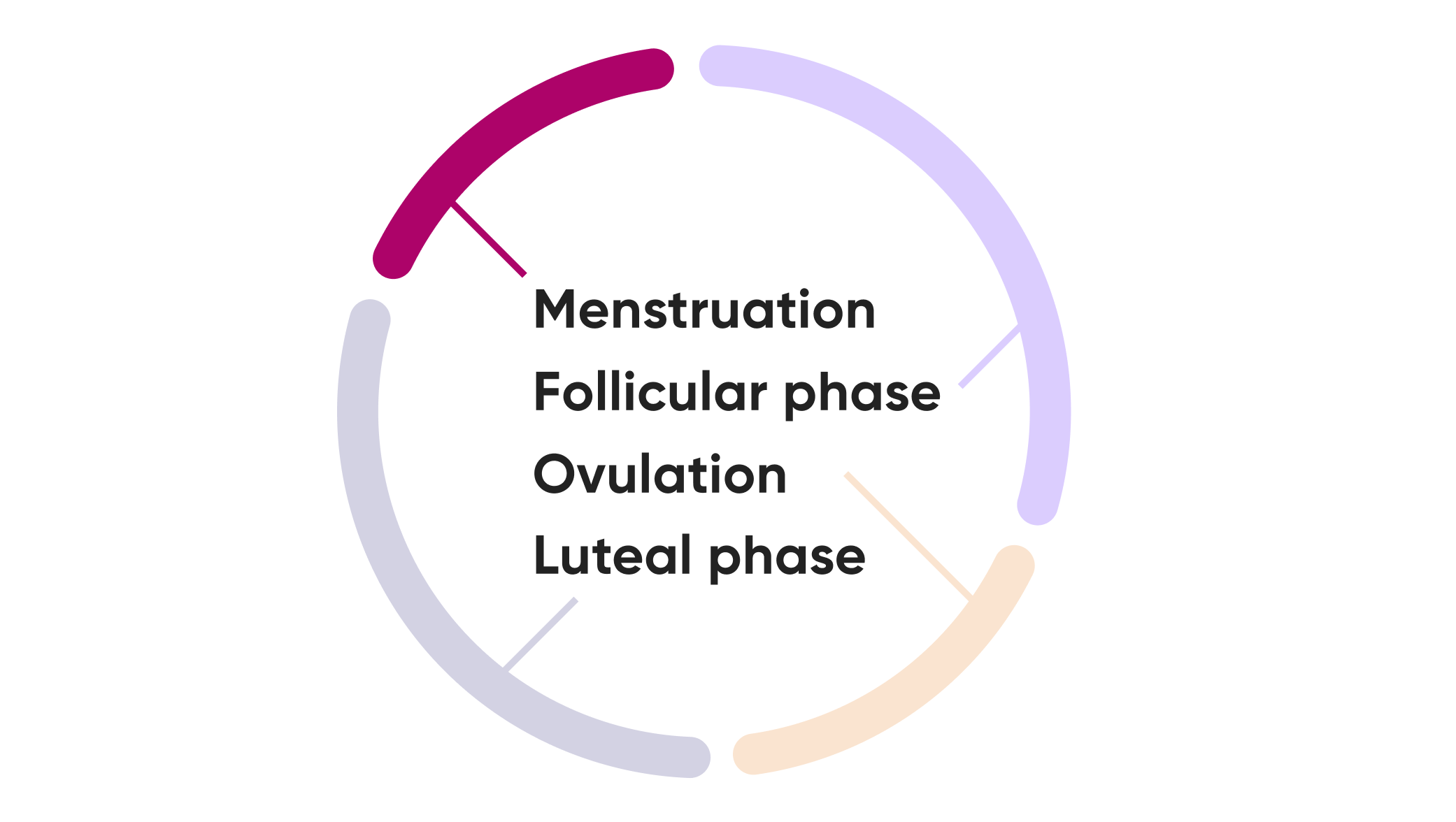
Why we discuss menstruation a lot more than your average team.
We recently kicked off a redesign of the Insights section in our app. Part of the discovery process analysed other apps that are nailing it, but to critically assess these charts and reports, it was necessary to drill into actual data that had accumulated over time (not just a quick glance on the day of downloading!) Conversations sparked from VP to designers to product managers, where one person demoed their fasting app - exposing their eating habits and weight data, another demoed their medication tracking app - revealing the medication they have been taking for a specific condition, and another demoed their fertility app - inviting questions about their menstrual cycle and their journey of trying to conceive. To share this raw data, requires raw vulnerability in the workplace.
While remote working has the potential to encourage seamless collaboration, it has also created an extra barrier - our screen can instead act as a physical wall, blocking us from forming meaningful relationships at work.
Julie Zhou said “Transparency and vulnerability are the fastest ways to earn trust”. And in this remote world, it’s harder than ever to achieve it. It’s not about simply making your calendar public, or keeping your desktop camera on. It’s about admitting you don’t know something (and promptly learning about it), or asking a team member for help, because of their expertise in an area over yours. Exposing more of your weaknesses doesn’t make you weak, it makes you approachable - by demonstrating you aren’t hiding anything, will make you more trustworthy. At Epsy, no one is ridiculed for not knowing something, in fact we believe that asking many questions is the best way that we can wade through the clutter and create a clear and concise world for our users. This forum is always open - in design critiques, spec reviews, and in working side-by-side on each feature. The culture was created by example. From the beginning, leadership has openly discussed the tough topics, and celebrated those who have done the same, or who have challenged the topics being presented. Is the off-the-bat transparency easier for uss at Epsy because we are remote-first? If anyone felt embarrassed by what a teammate had said, no one was going to notice their face flushing red (unless they had an M2 MacBook)? Thankfully not, we’ve tested these types of conversations successfully in person too.
Being fully transparent internally has allowed us to understand how to break down borders between ourselves and our patients too. We’re grateful for our patients who are honest with us, allowing us to reward their transparency by building vital experiences for them. This is precisely why menstruation has become a frequent topic at Epsy…
About 1 in 10 people who menstruate experience increased seizure activity during their cycle, but it’s suspected that there are many more who haven’t yet identified the trend in their own epilepsy profile. We’ve recently started to think about how we can represent this data in Epsy and show it to people with epilepsy, to help them be more prepared for times of increased seizure activity. In the long run, we hope this data will better inform not just individuals, but entire patient populations.
We don’t believe that just because the feature is made for certain gender sets, that it needs to be designed by them: the phrase “made for women, by women,” is outdated. Of course it helps to build empathy among us if we can identify with our users, but our primary job as designers and researchers is to get to know all our users on a deeper level, to be able to deliver exceptional experiences for them, eliminating our own bias that might skew our interpretation of any qualitative data. Making oneself vulnerable, opens oneself fully to learning. So we didn’t think twice when one of our male Senior Product Designers put up his hand to lead the project - celebrating a more objective view of the problem, and relishing research to reach the truth together.
We designed and tested a few options:
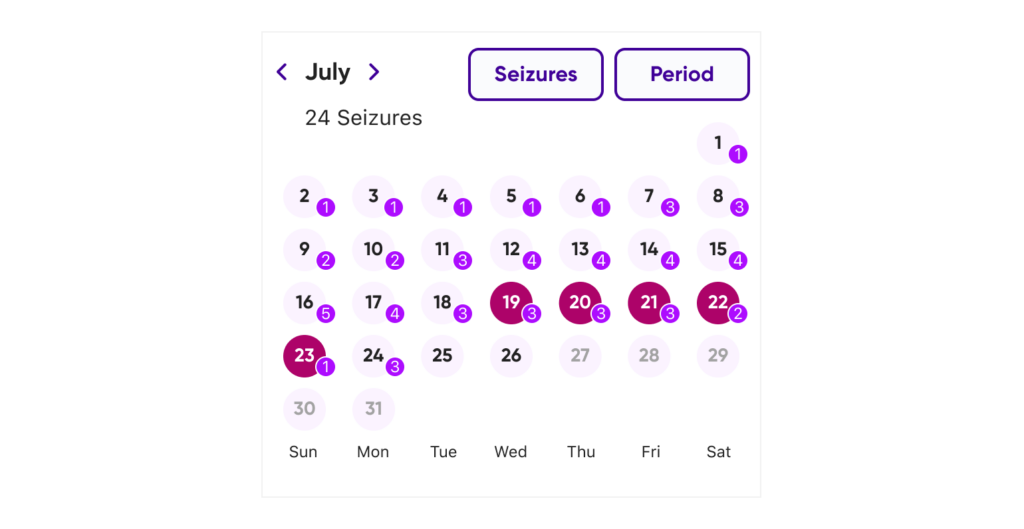
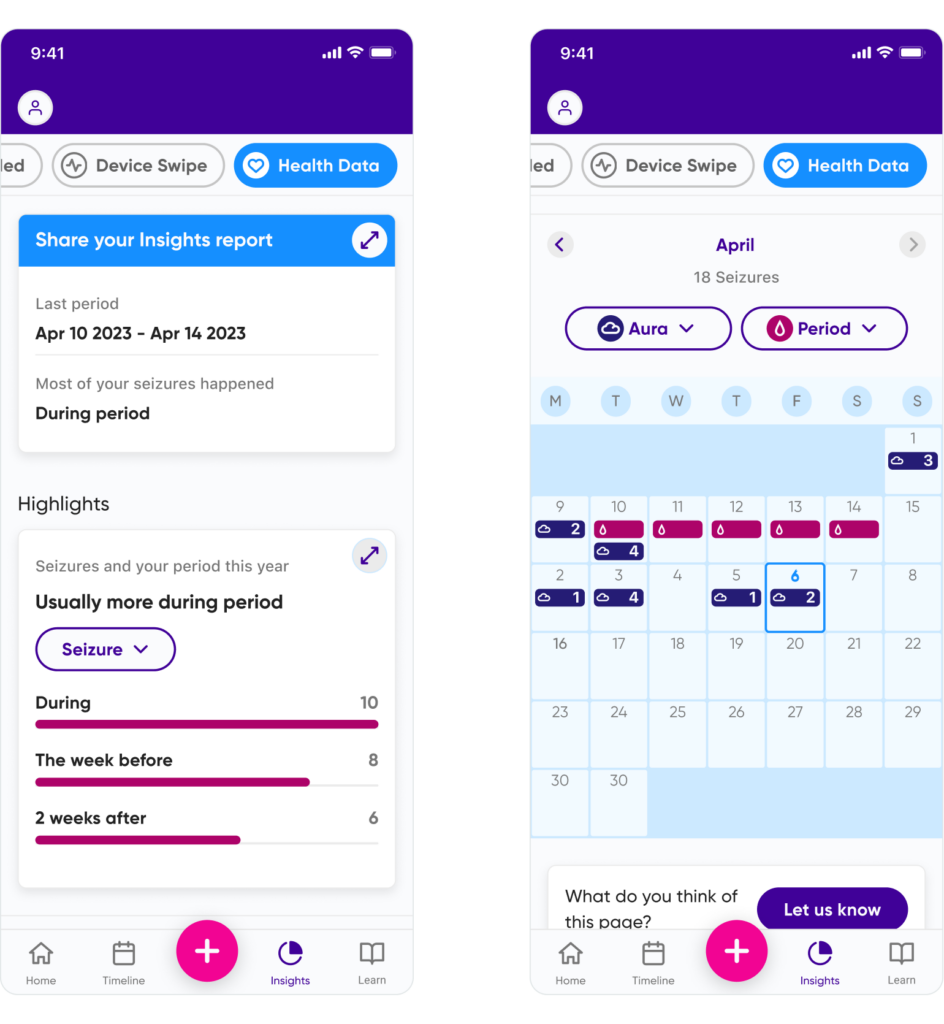
A straightforward option: showing period days on a calendar, together with the number of seizures experienced. Users tell us that they love uncovering their own patterns, and the monthly view provides a perfect birds-eye-view to enable them to do so.
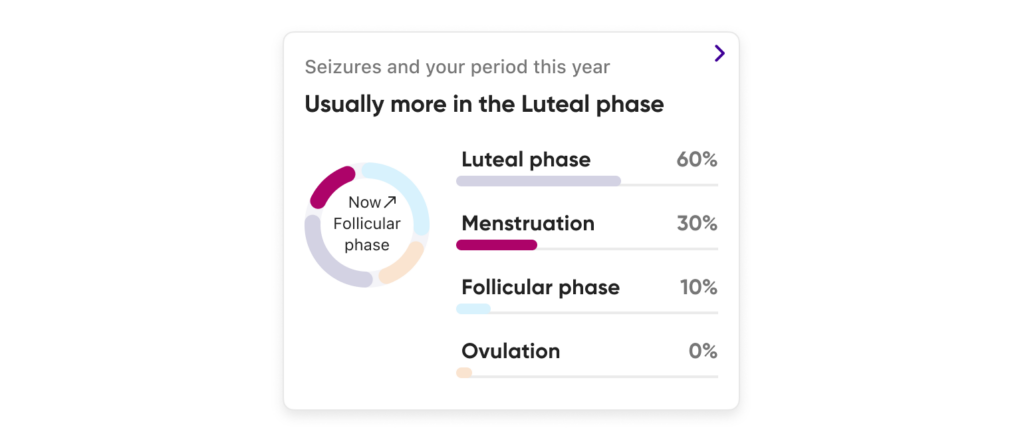
A common period-tracking option: by following how period trackers represent data, we could break down seizure activity by menstrual phase. The negative to this option is that there’s a fair bit of estimation involved, as we wouldn't know the exact phase dates based on the data we receive from health apps. We also received feedback that if a period is irregular, this would be inaccurate, leading to distrust, which is the opposite of what we are hoping to achieve with the feature.
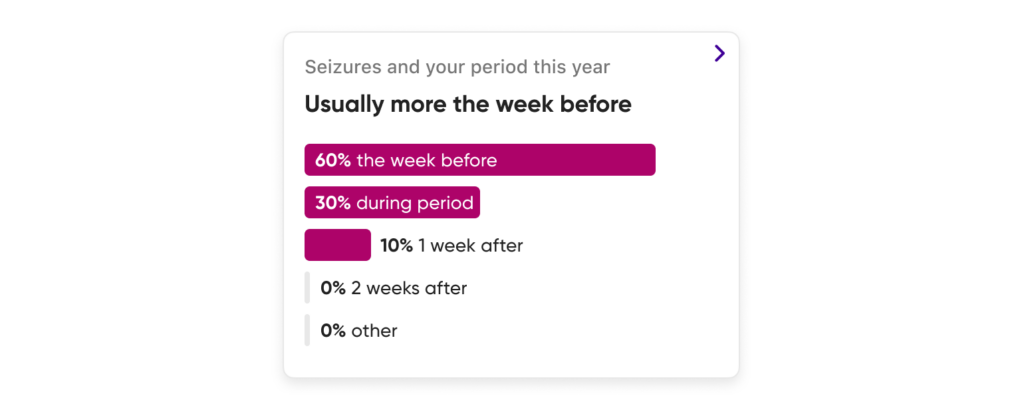
A bar graph option: by simplifying the menstrual phase approach into “weeks” before/during/after period, this still visually highlights if seizure activity increases at certain times around menstruation, and it doesn’t matter if a person’s cycles are irregular.
Based on what we found in user testing, we plan to implement iterations of the first and the last options and will continue to collect feedback on its value for further iterations. We need our users to talk to us about their periods! It’s also important that we are transparent with our users to help them get the most out of the feature: we need to provide them the choice of integrating their health data with Epsy, and remind them that they can revoke this permission at any time.
This product practice is again reflected back into our team practice. Being in a trusted, open environment makes us feel safe, and more likely to be vulnerable with our own minds, leading to better solutions.
How do you create a culture where you're constantly having candid, connected conversations, which ultimately leads to more authentic experiences for your users? Things should feel uncomfortable at first. A little bit like you’re being poked, to maybe even stand up to see things that were previously hidden, and to consider it all from a new perspective. Once you’ve realised that stretching your legs feels good, your mind will also be more open to exploring the previously taboo topics (those that are safe for work of course!).
