
Culture is created by the people (that's you).
Whether you find yourself being pulled back to the office, to satisfy your company's pre-pandemic level demands, or if you've managed to stay in your slippers for 77% of your time working remotely, you'll know that culture needs to be pushed even harder when it's reliant on internet interactions.
Here are a few ideas I've tried in my teams that have helped to maintain a positive working environment.
Weekly warmups and cooldowns
I stole this one from the design team at Figma. Easing into the week via a "warmup" with your team is a great way to connect socially and on a work level. Share weekend stories (photos encouraged) and then get into the high-level weekly goals and blockers - high energy and top motivation is key. Conversely, "cooldowns" close out the week on a Friday, celebrating achievements from the week, and are best served with a side of a fun activity and drinks. I've seen this work well on company-wide or macro team scale. And delegating the organisation to a different individual or team each week is best - the natural competition that tends to emerge results in organisers aiming to one-up the previous cooldown, so they just get better and better during the course of the year.
Monthly demos and retros
So much is created and built outside of your squad bubble, that setting aside time to showcase and view this work is paramount in providing that visibility and the opportunity for everyone to learn from their peers and keep raising the bar. It also helps individuals learn to present to different stakeholders, and how to listen and respond to a wider set of feedback. There are few rules: the demo can be scrappy-sneak-peak-progress or crafted-ready-to-ship-features. As long as there's an (ideally auto-generating) agenda for people to add their name and topic each month, you have a demo!
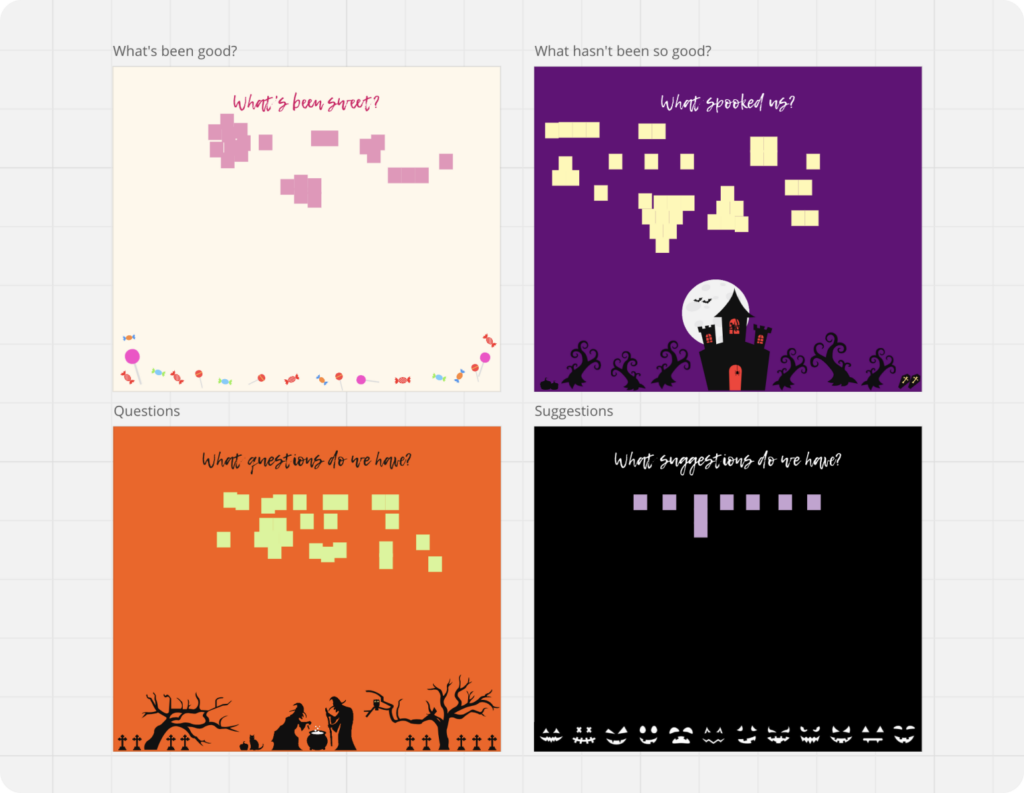
We all know feature retrospectives are great, but I find monthly company/team general retros can be just as meaningful. It’s a time for everyone to gather together, to discuss the wins and the fails, as well as to ask questions and dish out kudos to those who have gone above and beyond. Open every session by going through action points from last time, to ensure the leadership team is remaining accountable, as well as calling out what was achieved/released. Then the board is opened for everyone to create stickies, followed by grouping them to similar themes, then to vote on the ones that people feel strongest about, which are finally discussed. I’ve typically advocated for participant identity to remain public, but if you think you may generate a more honest discussion, try switching people to anonymous. Regardless, mix up the formats to keep things fresh - Miro and FigJam have some great templates to choose from in their libraries.
Celebrate the wins
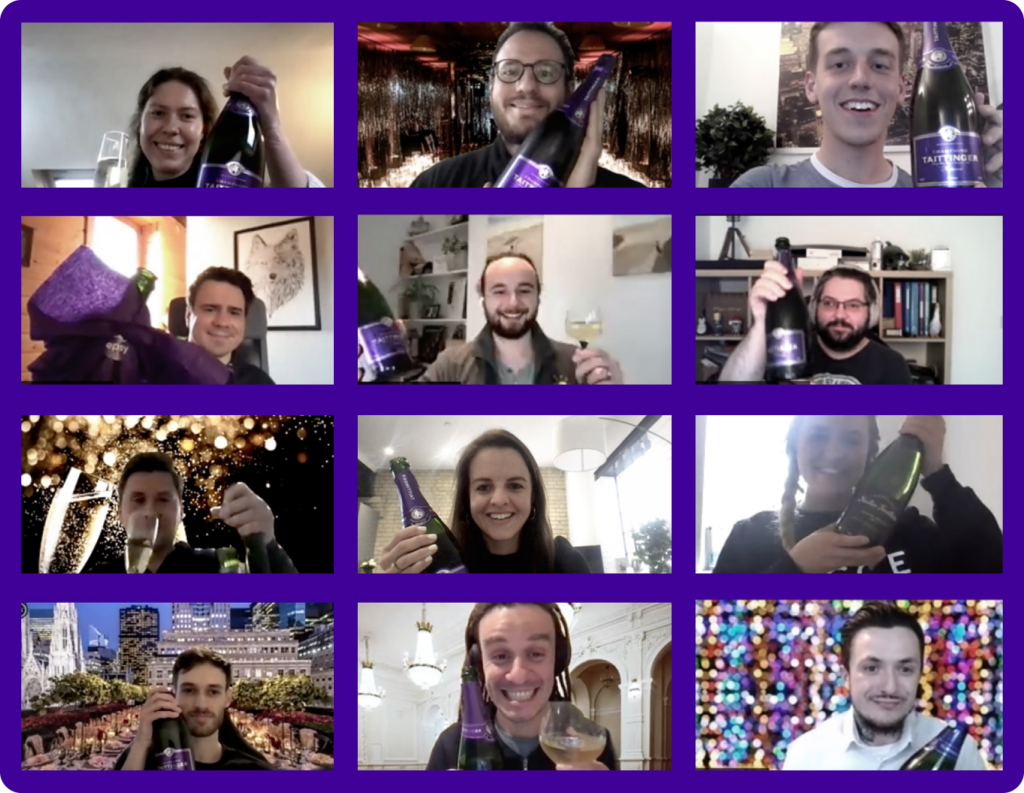
Whether it’s meeting a milestone for a release, receiving an excellent piece of feedback from a user, exceeding expected metrics for a feature, or high-fiving someone for doing a sterling job, these moments should be met with pause and celebration, appreciating everyone who contributed. Conducting this informally in Slack or a standup is good, but it’s even better to surprise people with rewards when they truly deserve it. Think food delivery vouchers for a team lunch to share together, or champagne to celebrate a monumental award win. The message is clear: show people they are valued, and they’ll want to keep proving it.
Get some merch
This may not be a product designer’s favourite job to execute - the panic of print! (Ideally you have a marketing team, who are experts in this field). But sleepless nights of wondering if there are any spelling errors on a batch order are worth it, as there’s something uniting about seeing your colleagues in the same jumper as you, or all drinking from team branded water bottles (in lieu of in-person water cooler chat, of course). Distributing items during a meet-up together is ideal, but can also be sent individually - either way, it’s guaranteed to bring smiles.
Believe in the beliefs
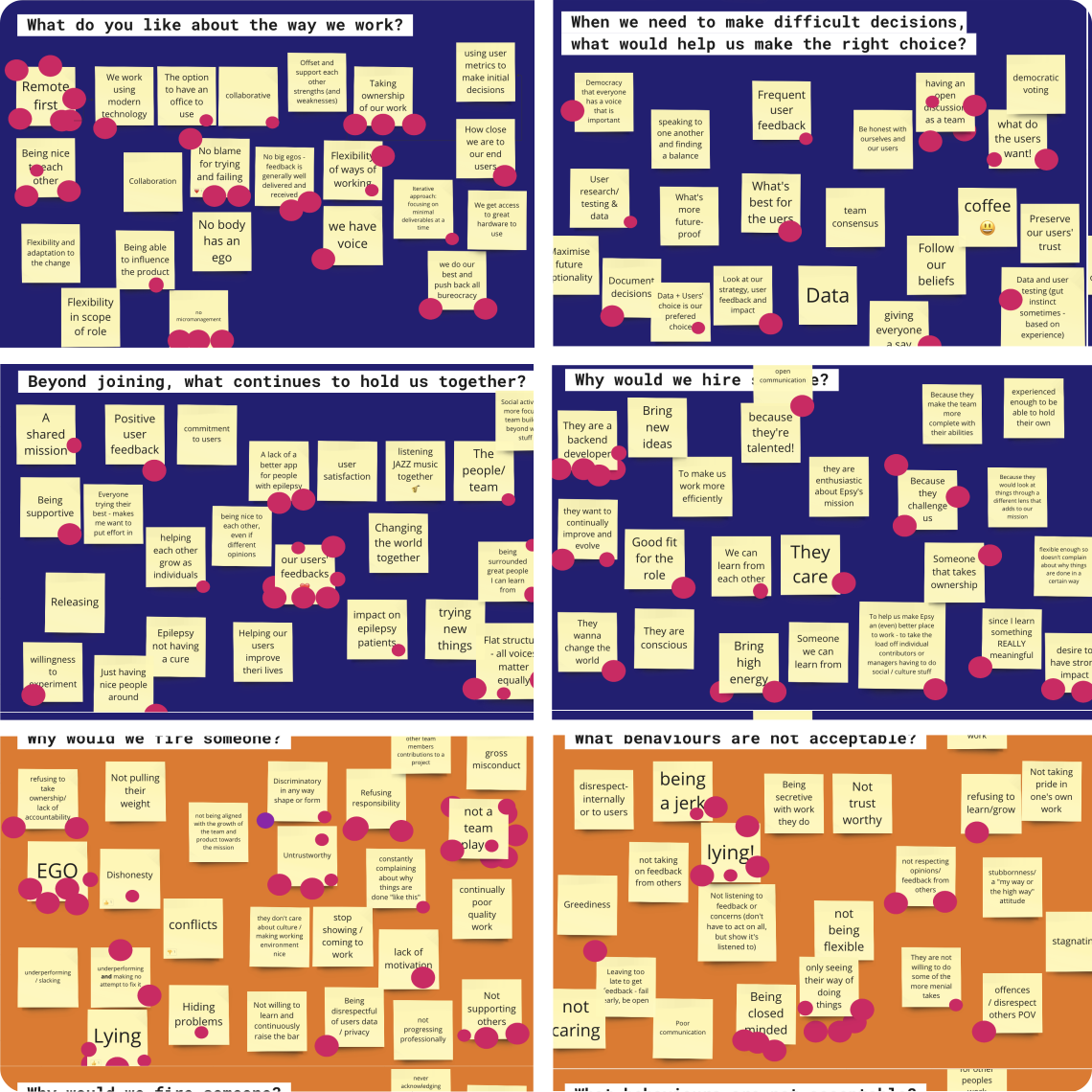
If your company is early enough in its journey, construct your values together. I recommend including everyone in initial workshops to generate thoughts, based on clear questions (see the image below for an example of this session I ran), and following this, disseminating the thoughts into clear themes and ultimately turning them into values. Best to keep the post-workshop part to reviewing with the leadership team only, until you’re ready to reveal to the company, as the crafting takes time and will never be agreed if it’s written by committee. If you’re a more mature team and already have values in place, conduct a “team contracting” workshop, where you all note down what you believe is important to align on to work well together (visually, this works well if you place all these stickies in a large circle), as well as what you think should be avoided (placed outside the circle). Again, these thoughts should be taken away by the team lead and crafted into a team contract. Teams all too often file away these values or contracts once they’re written, but they should rather be made public and communicated often - at least once a quarter.
Find common hobbies
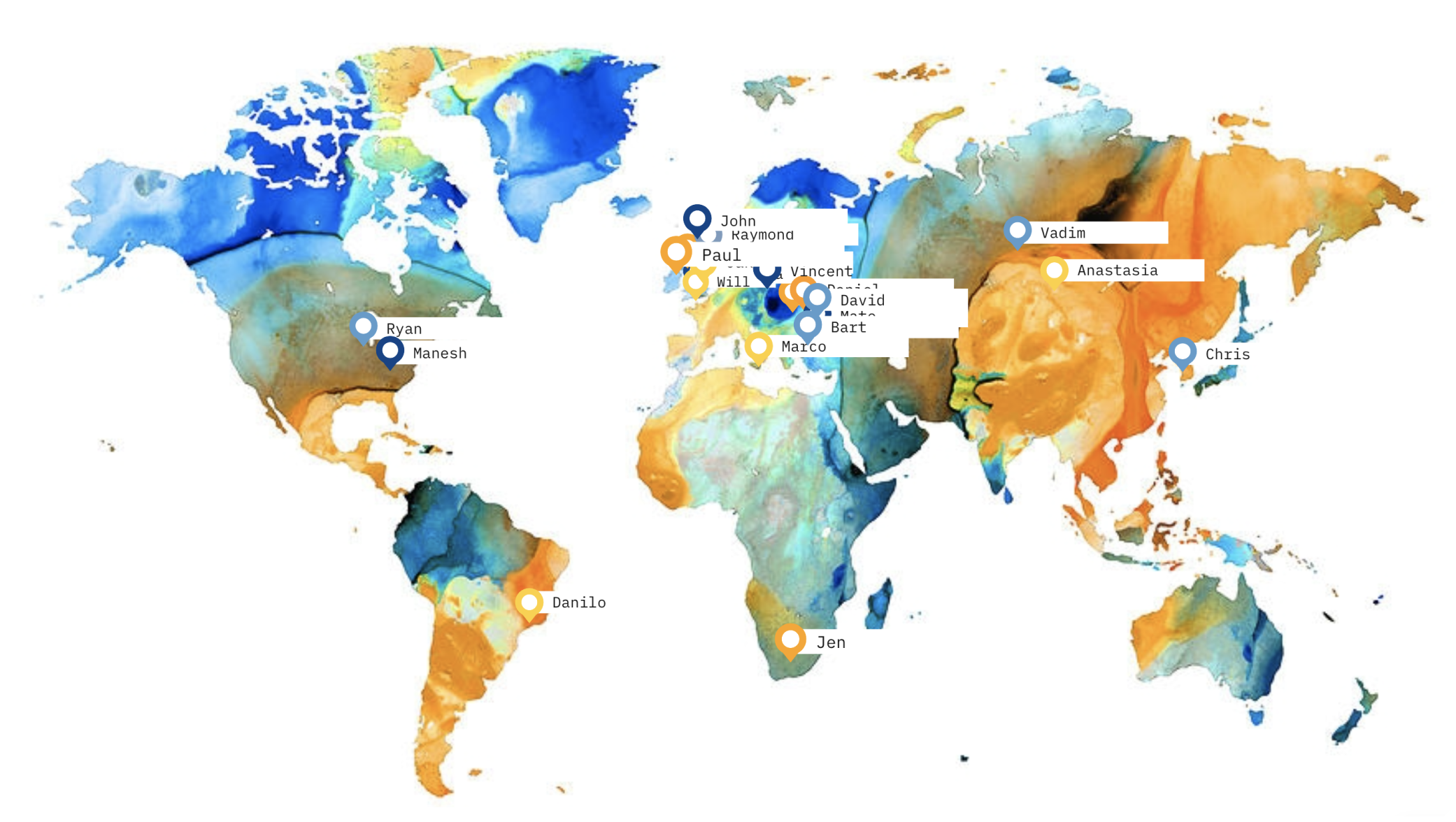
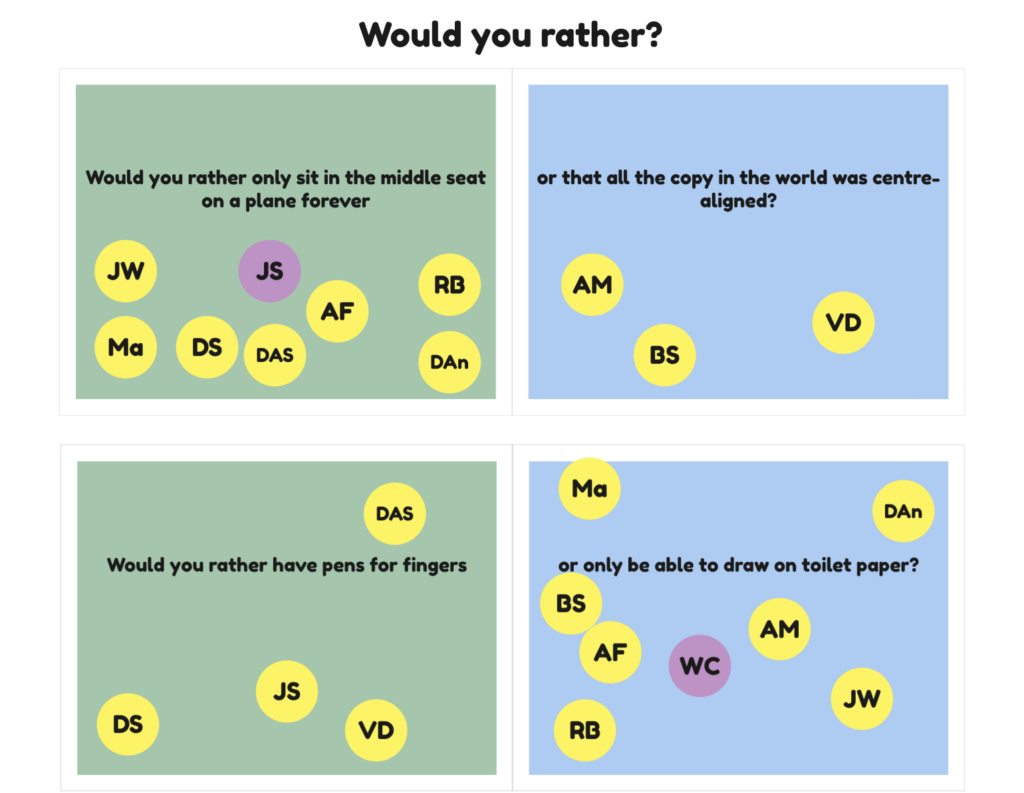
Make it your mission to find out common likes - whether that’s through 1 on 1 coffees, or team socials, and create ways to enjoy them together. Pretty much every team I’ve worked on has a cat channel in slack, where cat-lovers can browse and post cat pics with total freedom and joy! I’ve also set up remote yoga classes, and broadcast classes from my online streaming services for attendees to take part in together - great for a pre-work boost. If you’re not an early bird, there are many online games for teams, like Avalon, virtual escape rooms or even pictionary that you could play during lunch or after work. And if you can make it out for occasional in-person hobbies, like sporting events, that’s a bonus.
Make lasting introductions
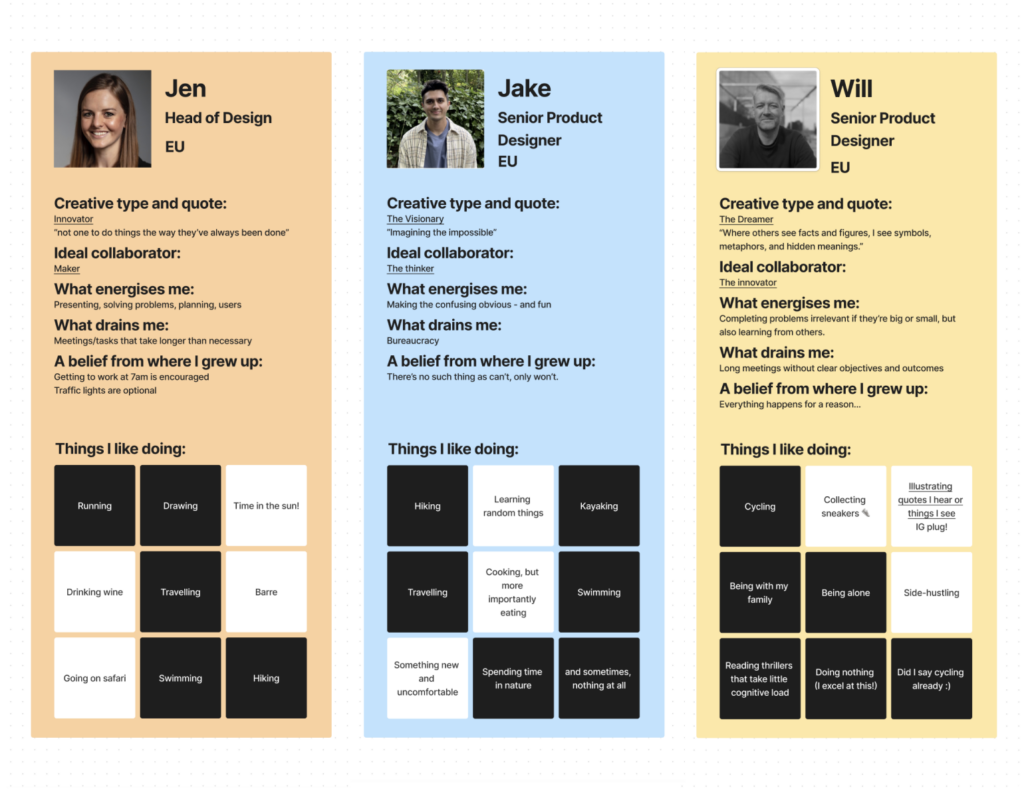
Starting a new job remotely is tough, so new-starter onboarding needs to be memorable in the best kind of way. It’s typical for each department to run new-starter sessions with new employees, but I’ve found that a great way to introduce new people or to set up new teams is to ask everyone to complete personal cards that have set questions and pre-exercises, which provide insight about you (outside of what you’d usually discuss in a work meeting), therefore useful to know to be able to effectively work together. The exercise automatically recognises the differences and therefore diversity of minds, making you all more mindful of respecting competing thoughts, but It’s also great way to unite over common hobbies!
A strong culture strikes a balance between business and fun - like a good mullet! Keeping people engaged is transactional - we need to motivate them to want to bring their best selves to the virtual office, to ultimately create their best work for the business to be successful.
